
Ask a hundred people how they keep their minds sharp and you will hear about crosswords, sleep and coffee. Fewer mention the two things they do before nine in the morning: what goes in the bowl and whether they move. Yet those are the two habits that researchers keep returning to, because they are cheap, repeatable and available to almost everyone.
This article pulls together what published reviews report about whole grains and about regular movement, how strong that evidence really is, and why some households now see the first hour of the day as a small routine rather than a rush. One caution up front: nobody has studied cereal and exercise together as a pair. What follows is two separate lines of research, described as plainly as possible.
What reviews report about regular movement
A large review in the British Journal of Sports Medicine pooled 39 trials of supervised exercise in adults over 50. Across those trials, people who exercised showed better scores on tests of thinking skills than people who did not, with a modest overall effect.2 The authors noted that sessions of roughly 45 to 60 minutes at a moderate effort were linked with the clearest benefit, and they rated the overall quality of the evidence as moderate, not high.
A second, much larger overview looked at physical activity and everyday mood. It gathered 97 reviews covering more than a thousand trials and about 128,000 participants, and reported that regular activity was associated with fewer symptoms of low mood and anxiety compared with usual care.3 The same paper is candid about its limits: most of the underlying reviews were graded as low quality, so the authors call for more rigorous trials rather than firm conclusions.

The bowl: why whole grains keep coming up
Whole grains keep the bran and germ that refined flour discards, which means more fibre, more B vitamins and more minerals in each spoonful. A 2023 systematic review in Advances in Nutrition collected the studies connecting whole-grain intake with thinking skills, mood and anxiety.1 Its verdict was measured: some studies pointed in a helpful direction, others found nothing, and the authors asked for better trials.
That is a useful reminder of what a bowl of cereal can and cannot be. It is a steady, slow-digesting start to the day, quite unlike a sugary, refined bowl followed by a mid-morning slump. It is not a switch you flip.
Reading the evidence honestly
From the sturdiest claim to the one nobody has tested.
Why people are pairing them anyway
The practical case is simple. Eating a real breakfast makes a morning walk easier to start, and a walk gives the bowl a reason to be unhurried. Many people also report that anchoring two small actions to the same hour makes both stick. That is a habit-building observation, not a clinical finding, and results vary from person to person.
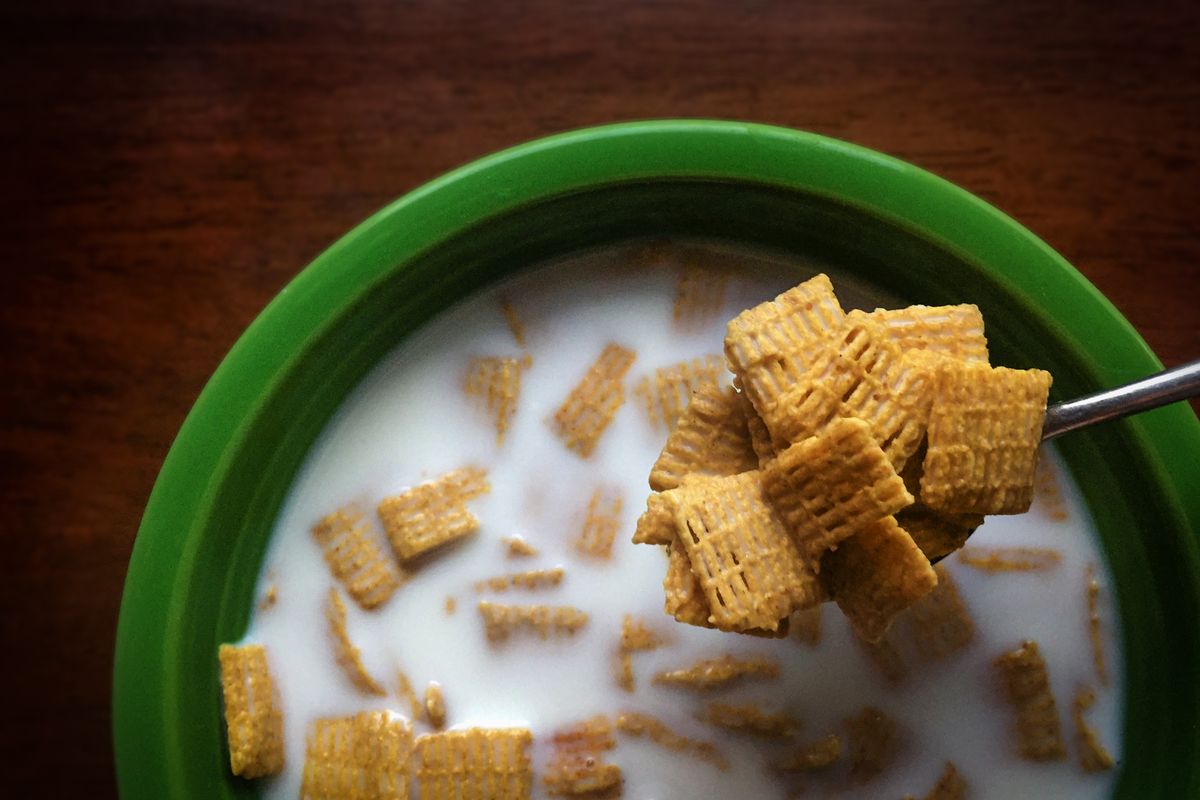
A morning that takes about forty minutes
- First 5 minutesDrink water, open a window
Light and fresh air are the cheapest signals that the day has started.
- Next 10 minutesPour a whole-grain bowl
Choose a cereal with whole grain listed first, add fruit or nuts, and sit down to eat it.
- Next 20 minutesWalk at a pace that lets you talk
Guidelines describe this kind of effort as moderate. Build up gradually and listen to your body.
- Last 5 minutesWrite down one thing for the day
A short note keeps the routine meaningful and gives your mind a clear first task.
Keep it light
Start with ten minutes and add time each week. The best routine is the one you will actually repeat.
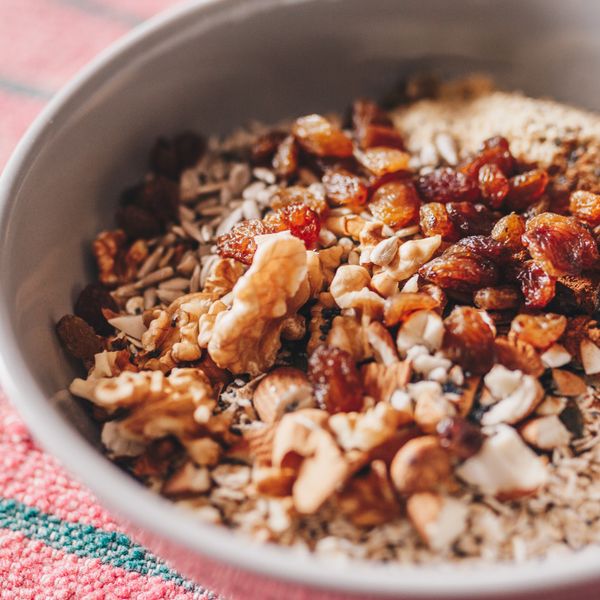

Prefer the bowl ready to pour?
Some households choose a whole-grain cereal so the first step of the routine is already done. If that fits your mornings, take a look at the one we have been describing.
Explore the Whole-Grain CerealIndividual experiences vary. This is a food item.
Questions readers ask
Do I need a gym or special equipment?
No. Most of the research reviewed here involves ordinary activity such as brisk walking. Choose something you enjoy and can repeat.
Is a cereal the same as oatmeal?
Not exactly. Both can be whole-grain options. The label matters most: look for whole grain as the first ingredient and watch the added sugar.
How long until I would notice a difference?
There is no reliable timeline, and results vary from person to person. Think of it as a routine you try for a few weeks and then judge for yourself.
Is this medical advice?
No. It is general information. If you have personal concerns, or before starting any new activity, speak with a licensed professional.
References
- Ross AB, Shertukde SP, Livingston Staffier K, et al. The Relationship between Whole-Grain Intake and Measures of Cognitive Decline, Mood, and Anxiety: A Systematic Review. Adv Nutr. 2023;14(4):652-670. PubMed
- Northey JM, Cherbuin N, Pumpa KL, Smee DJ, Rattray B. Exercise interventions for cognitive function in adults older than 50: a systematic review with meta-analysis. Br J Sports Med. 2018;52(3):154-160. Journal page
- Singh B, Olds T, Curtis R, et al. Effectiveness of physical activity interventions for improving depression, anxiety and distress: an overview of systematic reviews. Br J Sports Med. 2023;57(18):1203-1209. Journal page
- Bull FC, Al-Ansari SS, Biddle S, et al. World Health Organization 2020 guidelines on physical activity and sedentary behaviour. Br J Sports Med. 2020;54(24):1451-1462. Journal page